A Story of Movement, Community and American Making – From Old Chatham to Malden Bridge
As the United States approaches its 250th anniversary, it’s easy to focus on the big events – declarations, battles and speeches. But much of America’s foundation was built more quietly: through movement, trade, communication and the everyday routes that connected people to one another.
In rural northern Columbia County, Albany Turnpike is one of those enduring threads – a historic roadway that continues to carry modern life, while preserving the footprint of earlier centuries.
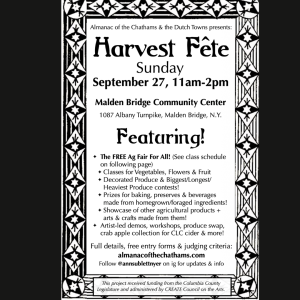
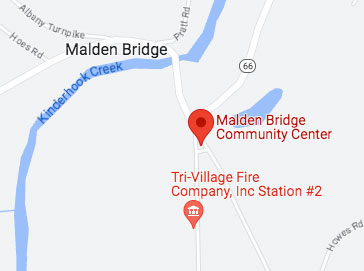
For the Malden Bridge Community Center, located at 1087 Albany Turnpike in Malden Bridge, this history is particularly important. The Turnpike and the Center reflect an historic crossroads where people have traveled, worked, connected and gathered to build community to this very day.
A Road Older Than the Republic
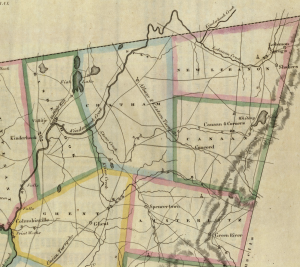
Long before it was formalized as a turnpike, this route was part of a broader network linking inland agricultural communities with the Hudson River and the Albany region. During the Revolutionary era, such routes were essential. Goods, news and people moved along them, shaping settlement patterns across the northern Hudson Valley.
Old Chatham is recognized as one of the earliest areas settled within the Town of Chatham. Slightly to the north, Malden Bridge developed around a defining geographic feature – the crossing over Kinderhook Creek – which anchored its identity and growth.
The Turnpike Era: Building a Nation Through Infrastructure
Following independence, the new nation faced a practical challenge: connection. Roads were often unreliable, subject to seasonal conditions and difficult to maintain. At the same time, farmers needed access to markets, towns relied on consistent mail routes and communities depended on travel for commerce and communication.
In New York State, one solution emerged through chartered turnpike companies. Beginning in the late 1790s and expanding into the early 1800s, these public-private partnerships improved roadways in exchange for toll collection. This system played a significant role in shaping early American infrastructure and enabling regional economic growth.
Albany Turnpike was part of this broader movement – linking rural communities into a more cohesive and functioning network.
Old Chatham: A Lasting Crossroads
Today, Old Chatham still reflects its historical role as a crossroads community. Its center remains oriented around the intersection of Albany Turnpike and County Route 13, where activity naturally formed in the era of horse-drawn travel.
Nearby stands the Samuel Wilbor House, dating to approximately 1770 – a rare surviving structure from the Revolutionary period. Buildings like this provide a tangible connection to the people who lived and worked here during the America’s earliest years.
Malden Bridge: Where Road and Water Meet
Malden Bridge tells a complementary story – one shaped by both roadway and waterway. The crossing over Kinderhook Creek was central to its development, enabling movement across the landscape and supporting local industry.
By the late 19th century, Malden Bridge had become a modest but active industrial hub, with paper mills and related manufacturing located along the creek. These enterprises depended on reliable transportation routes. Roads like Albany Turnpike allowed raw materials to arrive and finished goods to reach broader markets.
The lasting significance of the road is that it did more than connect destinations. It enabled growth, exchange and the relationships that defined rural New York as an interconnected region. Today Albany Turnpike remains a path of movement and connection – linking past to present and reminding us that the foundations of building community are often created through the roads and organizations like the Malden Bridge Community Center. These legacies are preserved through stories that carry us forward.