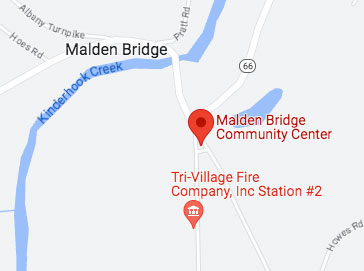
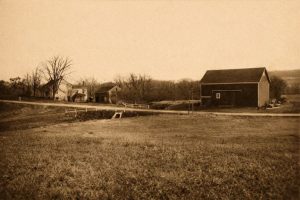
Communities across the country are reflecting on how national history connects to hometown places from “sea to shining sea.” In Malden Bridge, that connection is especially evident along Route 66. The Abraham Van Ness House stands quietly beside what is now known as the Berkshire Spur.
Built in 1749 by early settler John Van Ness, the house predates both the founding of the nation and the development of Malden Bridge. Its barns once stood in the area where the modern Massachusetts Turnpike and Interstate 90 were constructed in the 1950s. Typical of early Dutch family settlements, the Van Ness homestead likely encompassed hundreds of acres. While farms in this part of Columbia County could be quite large, they were generally defined by natural features, early roadways, and neighboring family holdings.
As the United States approaches its 250th anniversary, the house serves as a quiet but powerful reminder that the American story was shaped not only in cities, but in small rural communities. It stood long before the events of the American Revolution and continues to endure as a testament to craftsmanship, resilience, and the spirit of early settlers in Columbia County. The Van Ness House was part of a living network, anchoring daily life in a growing rural community.
John Van Ness, who built the homestead in 1749 – predating the hamlet of Malden Bridge – is noted in Ellis’ History of Columbia County as having served as a scout during the Revolutionary period. Like many men of the region, he relied on his familiarity with local roads and terrain to support communication and movement at a time when such knowledge was essential. His role offers a small but meaningful look into how local residents contributed to the broader effort during Americas’s earliest years.
While there is no historical evidence to confirm it, local lore suggests that John Van Ness may have inspired elements of James Fenimore Cooper’s character Hawkeye in The Last of the Mohicans, set during the French and Indian War (1754 – 1763).
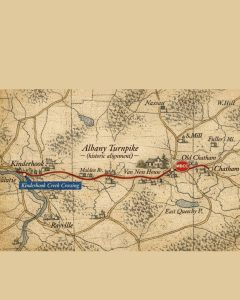
In the mid-18th century, this area was a network of farms, waterways, and developing roads connecting neighbors and trade routes. What is now a quick drive along Route 66 was once a vital lifeline for communication and commerce.
Today, the house is most closely associated with Abraham Van Ness, a member of a large and interconnected local family. Like many in the region, the Van Ness family played a role in the Revolutionary era through local militia service – neighbors serving as citizen-soldiers who helped protect their communities and contribute to the larger fight for independence.
One of the most significant moments tied to the house occurred in August 1777, during a pivotal phase of the war. While accounts vary in detail, all agree that the Revolution reached the Van Ness House in a deeply personal way. The story serves as a reminder that history was shaped not only on battlefields, but also in homes, along roads, and within families navigating uncertain and difficult times.
Over the years, the importance of the Van Ness House has not been forgotten. A New York State historical marker, installed in the 1930s by the New York State Education Department, reflects the community’s long-standing commitment to preserving and sharing its history. That effort continues today – not just through markers, but through storytelling, local programs, and gatherings that keep these connections alive.
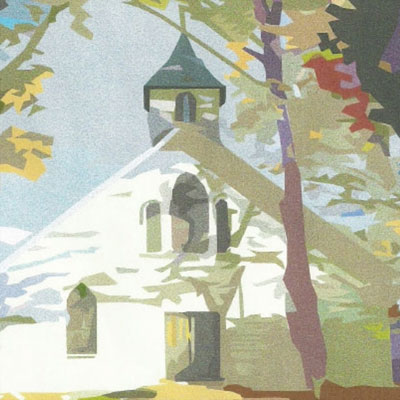
What makes the Van Ness House especially meaningful is not just its age or its ties to historic events, but its continued presence within the community. Like the Malden Bridge Community Center itself, it represents continuity – a place where past and present meet, and where stories are shared across generations.